
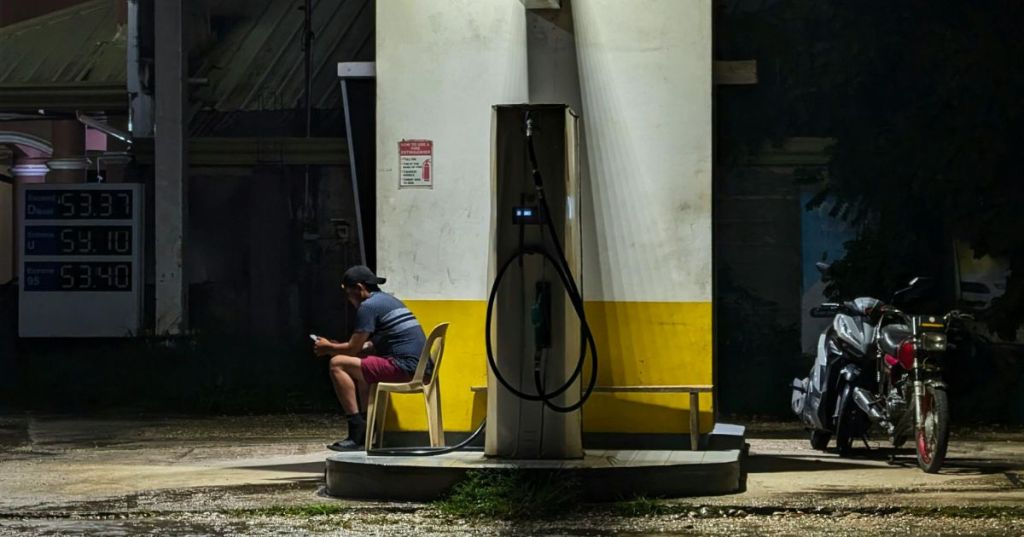
To deny the existence of a crisis is to undermine its impact on society.
The stubborn choice to use the term “national energy emergency” instead of “oil crisis” becomes an obtuse response to the current oil supply shortage, especially when there are ongoing efforts to secure an adequate supply of oil for the country. As far as anyone is concerned, a nationwide scrimmage for supplies implies scarcity in reserves – and that very scarcity would, of course, breed inflated prices.
However, the Philippine oil crisis is not just a matter of price hikes. It is not just a matter of livelihood and how daily life could be affected; it is recognizing how individual lives reflect the country’s economic affairs, territorial disputes, and environmental preservation. Any narrative that perceives the issue from an individualistic lens, as well as through its domestic consequences, would simply be an understatement of the severity of the situation.
Stifling Aid
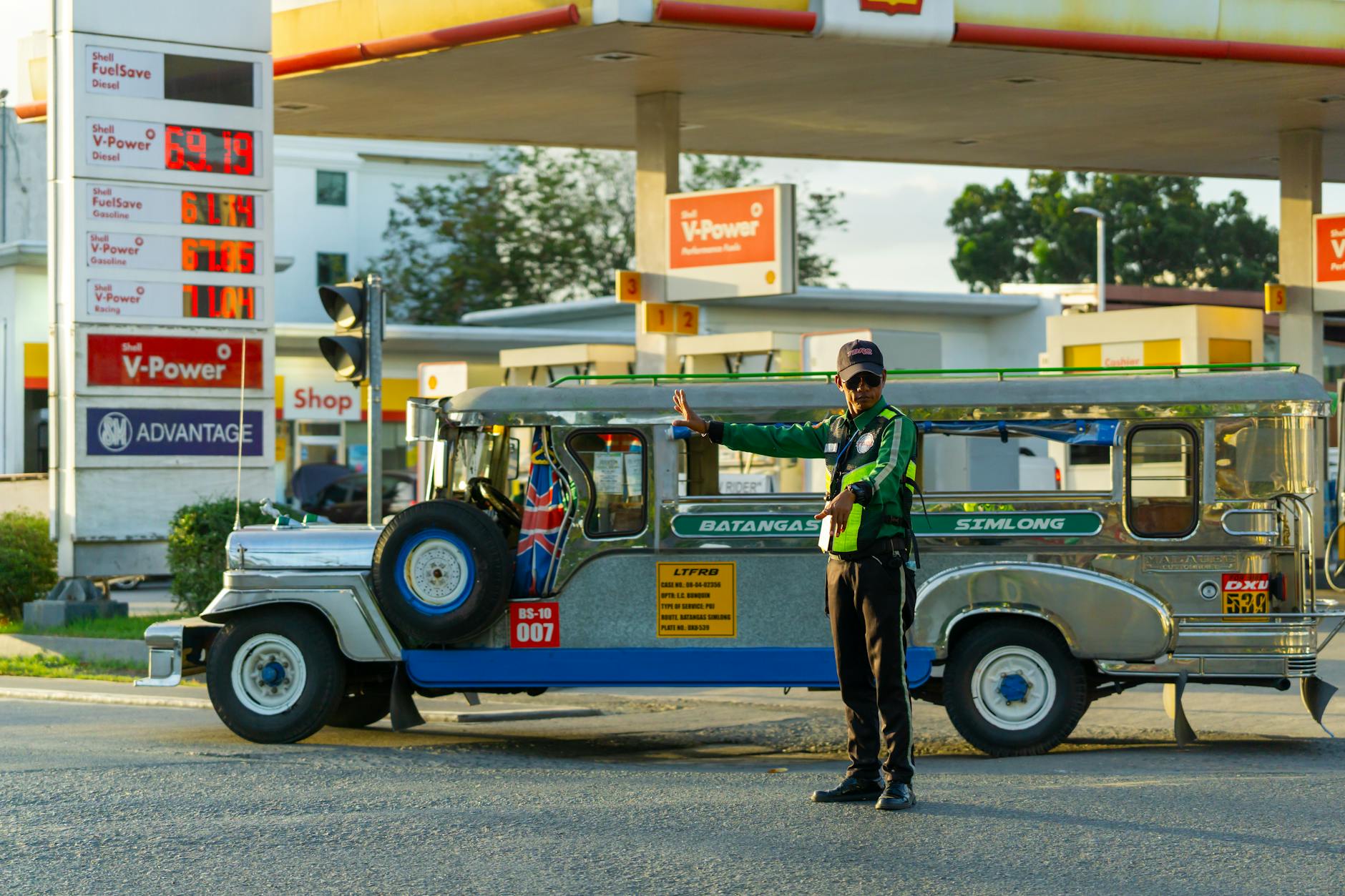
In recent events, fuel subsidies for Public Utility Vehicle (PUV) drivers have been distributed, amounting to roughly Php 5,000. Department of Social Welfare and Development (DSWD) Secretary Rex Gatchalian reports that Php 144,685,000 in cash relief has been distributed to 22,937 out of 27,181 drivers registered under the Transport Network Vehicle Service (TNVS) within Metro Manila. The Land Transportation and Franchising Regulatory Board (LTFRB) confirms that over Php 651 million worth of fuel subsidies have been distributed across the main parts of Luzon (i.e. Metro Manila, CALABARZON, and Central Luzon). Although the fund includes TNVS partners, UV Express, passenger and P2P buses, Filcabs, taxis, tricycles, and delivery services in its scope of beneficiaries, not all drivers have fully received the cash assistance.
Along with that, Libreng Sakay initiatives have been enacted by numerous Local Government Units (LGUs), primarily following Manila City’s example. As of March 30, 1,442 jeepneys have been deployed by Manila City Mayor Francisco “Isko Moreno” Domagoso, with the drivers receiving Php 3,500 per day to offer free rides to Manila commuters.
Other practices include blatantly refusing to become part of the PUV units that offer free rides. Most jeepney drivers within and outside Metro Manila have resorted to asking for voluntary top-ups from commuters. In an interview via DZGB News, Jeepney driver Javier Moral confirms this practice as well as attests to the veracity of hardships faced by his fellow drivers amid the consecutive oil price hikes.
Suffice it to say that all intended beneficiaries have received their respective provisions; these paltry solutions are insultingly temporary.
In this context, aid ironically undermines the public’s self-determination and disempowers them. Indeed, it is more practical for the government to have its constituents no longer be privy to the severity of the situation. Aid subjects the public to oppressive silence, preventing them from recognizing the crisis as one that bears consequences on a global scale. Shoving down numerous aid provisions onto the public’s throats quickly becomes a stifling measure to curb public outrage instead of being an effective and sustainable response to the oil supply shortage. Aid would indirectly oppress the public in a prison of its own making, embracing conformity as it warps their political involvement into apathy.
Selling Scarcity
It must be stressed that the country’s inability to harness its own resources becomes the crux of the problem. In response to this, Republic Act No. 8479, otherwise known as the Oil Deregulation Law, became the only means of the government to somehow curb oil price hikes. Although it cannot be denied that the government’s capacity to influence these prices is limited to monitoring and alignment with the country’s large-scale conglomerates and multinationals that run today’s oil companies. Because of the inadequacy of these state powers, the public is made to take the full brunt of oil price hikes head-on.
With great pride, Philippine President Ferdinand “Bongbong” Marcos Jr. announced via Radio Television Malacañang (RTVM) the successful Drill and Testing of Camago-3 – the latest Malampaya gas field exploration project run by Enrique K. Razon Jr.’s Prime Energy of Prime Infra Foundation, Inc., boasting a 45% stake in local oil explorations. The venture has been reported to produce 2.5x the amount of Liquefied Natural Gas (LNG) than the first attempt, Malampaya East – 1. Flowing at 60 million cubic feet per day, the Camago-3 is expected to yield around 98 billion cubic feet of gas, set to be developed under the extension of Service Contract 38 (SC 38) that would push for further exploration of the Malampaya gas field until 2039.
Although optimistically declared, one thing that needs to be stressed is that the Malampaya gas field is set to run out. The substantial resources recently acquired from the Camago-3 project would still pale in comparison to the country’s fuel consumption trends. Data from the Census and Economic Information Center (CEIC Data) reports that the country’s oil consumption in 2024 was at 486,641 barrels per day, roughly 178 million barrels* consumed within that year. Taking into account the potential 98 billion cubic feet of gas yield from the Camago-3 alone, it would mean acquiring over 16.9 million barrels** worth of oil resources if explorations proceed well.
To say that the Camago-3 would result in more affordable energy resources for the public is to promote a farce. Admittedly, the Malampaya gas field could only go so far, given how it provides 20% of the country’s energy needs, albeit electricity-focused. Therefore, to meet the continuously growing oil demand, importing supplies from other countries would remain a pursuit for the government.
Traditionally, the Philippines receives crude oil imports mostly from countries within the Middle East, like Saudi Arabia, the United Arab Emirates, Iraq, Kuwait, and Oman, as per the Observatory of Economic Complexity (OEC). But due to recent events, the government began pursuing non-traditional partners, as well, bearing two negotiating points: securing an adequate supply of oil resources or scouting for foreign oil producers. Department of Energy (DOE) Secretary Sharon Garin mentions that as of March 26, the country’s current supply will last by the end of April; specifically, 45 days or less. With the additional 142,000 barrels of diesel procured by the government as per Executive Order No. 110 (otherwise known as the Emergency Energy Security Program), Malacañang positions the country’s reserves to last until the 30th of June. The country also recently received over 700,000 barrels worth of crude oil from Russia, with negotiations potentially securing up to 2.5 million barrels through the country’s only oil refinery, Petron Corporation, with its operations spearheaded by local tycoon Ramon S. Ang. Although there are current tensions over territorial disputes, China is also being considered not as a direct supplier, but as an addition to the country’s roster of oil exploration project stakeholders.
One thing is for certain: the means of securing the country’s oil supply still comprises old practices and ironically places the country farther from its goal of achieving energy security. The country’s oil reserves remain scarce. Its only resort is to pursue a series of unsustainable decisions that involve relying on the production capabilities of multinationals, with the local bourgeoisie in cahoots.
Coincidentally, this situation becomes an ideal venture for plunder. After all, there is much to be earned in scarcity.
License to plunder
In a Manila Bulletin feature, Mat Richter suggests the country’s current disposition as an up-and-coming hub for Liquefied Natural Gas (LNG). Achieving this would definitely prompt continuous and unhampered oil exploration ventures and collaborations with significant industry figures abroad. The passage of Republic Act No. 12120, otherwise known as the Philippine Natural Gas Industry Development Act, last January 8, 2025, transformed this ideal into a legal doctrine, solidifying the groundwork for currently operating oil exploration projects in the country.
The Camago-3’s successful exploration efforts have definitely established the momentum needed to pursue more exploration sites, opening the door to new investments brought by other countries collaborating amid the closure of the Strait of Hormuz. However, this situation leaves the country vulnerable to repeating its ill history – a grim reminder of the Malampaya fund scam traceable to the notorious Pork Barrel Queen herself, Janet Lim Napoles.
There are no measures set that guarantee that all proceeds of these exploration projects would be rerouted to the public, nor does it guarantee that all oil explorations would lead to energy-related pursuits. If anything, there are a plethora of cases that shape the country’s history of rerouting funds to ghost institutions. With little to no vigilance over the quality of partnerships, the Philippines could even go as far as working with the enemy to further damage its territorial, political, and economic affairs.
Commercializing sea territory would inevitably displace citizens who reside in coastal areas. Ostensibly, the country’s fishing community relies heavily on fuel to run their boats. Any act, therefore, that removes them from their fishing grounds inevitably impacts their livelihood, as well as leaving their fishing grounds vulnerable to dispute. If it were to be perceived using the typical lens today’s top analysts are pushing for, it would comprise pushing for alternatives and absurdly suggesting conservation efforts and capped consumption. Of course, compliance with such becomes just as absurd.
In this case, if skyrocketing diesel prices would not be enough to prevent the fisherfolk from accessing these waters, the destructive consequences of numerous oil tankers and drilling efforts would diminish the marine life and aquatic resources within the area, ultimately placing the lives of the local fisherfolk at risk.
Once the sea is finally free from civilian communities, fleets of foreign vessels would pillage the area, with every bit of the country’s natural resources up for grabs. At that point, the Philippine Natural Gas Industry Development Act would reveal its true and final form – a Trojan horse that allows entry for exploitative powers and a doctrine that surrenders the country’s reserves until nothing is left.
The dirtier the venture, the better the profits. This is why it is not surprising that the current fixation on natural gas exploration, along with a systemically ingrained reliance on fossil fuels and crude oil, is preferred and profitable. At this point, suggesting a transition to renewable energy sources would sound ludicrous and impractical. But in fact, pursuing renewable energy is indeed a more plausible and practical endeavor – one that prolongs the lifespan of natural resources and the environment.
This is how ownership is established – to harness the very earth itself by nurturing it to benefit from long-term yields.
The sustainability of decisions, therefore, becomes crucial to solving the crisis. To achieve true energy security, national industrialization becomes the peak form of owning and controlling the value of basic necessities. It is the country’s only means to counter the whims of foreign and commercial entities. Anything that falls short of that would deprive the government of the right to say that it is protecting the interests of the Filipino people.
* 486,641 barrels per day multiplied by 366 documented days in 2024
** 8 billion cubic feet of gas yield from the Camago-3 multiplied by the 0.00017245495986573 Barrel of Oil Equivalency (BOE) – a standard unit of measurement for investment purposes
About the Author

John Thimoty Romero is a Senior High School teacher at Mapúa University – Makati. Upon his graduation as Bachelor of Secondary Education – Major in English, he received the Gawad Graciano Lopez – Jaena award for his service as Editor-in-Chief of Philippine Normal University’s official student publication, The Torch Publications. He publishes his views and opinions through his blog, The Pinoy Meddler.





Leave a Reply