

Editor’s Note: This is a direct reply to a recently published article of SubSelfie.com entitled
A Hero’s Burial?
Dear Alaysa,
I read your article detailing the events of how your family ‘suffered’ under Martial Law. It would be preposterous if I say ‘I feel your pain’ and that whatever ‘injustice’ was done is too trivial. I would not go to that extent. In fact you are right to be indignant and you are right to express the ‘pain’ that martial law has given to your family and the same can be said to people who felt injustice. Indeed, it is my premise that violence is personal. To convince you otherwise is asking for you to turn your back on what your family has ‘fought’ for and to invite insult to your pain. I have high regard for people who fought for what they believe in whether on the right or wrong side of history. For what is ‘right’ and what is ‘wrong’ then? How can we be a judge to the steady flow of narratives from that great stream called history? Politics, violence and perspectives are all too personal indeed.
Justice, you said, is best served when the ultimate source of evil — the ‘dictator’ — should not be buried at the Libingan ng mga Bayani. That doing what Duterte is saying would be a dishonor to those who fought for freedom and those who fought bravely for this country to exist.
Our ‘heroes’ are human. The people we put in the edifice of glory are portrayed seemingly incapable of harm and seldom do we put their motives under scrutiny. That I believe is what we read in our history books — the ultimate imprimatur of who was bad and nasty. ‘Marcos was bad. He is the evil incarnate and nothing he has done deserves consideration. The man, some would say, is incapable of remorse and that he has brought this country to ruin.’
A common perspective perhaps that we can both agree. No human, dead or alive, hero or villain in the eyes of some historians is purely evil. And perhaps, your perspective isn’t shared by a lot of people. Thirty years of propaganda have portrayed one person as solely responsible and the only culprit to all the sufferings we have today, personal and perhaps communal for us as a people struggling to get out from the scourge of colonialism.
Why the need for some historians to portray Marcos as the perennial bad guy? Why the need to horseblind the people into believing he only deserves our contempt and punishment? Is history the same for all of us? Is there one singular narrative we all should believe in?
Ultimately, history is not innocent of motives. Some who gained power after they have deposed Marcos need to justify their existence and they picked a very convenient target.
In my previous social media posts, I always posit the argument that history is written by the victors and that perhaps, our history is a long epic of how we were divided and conquered. That for us to hate each other is convenient for those who want to control us.
To conveniently put the blame of the ‘atrocities’ of martial law on one person helps us make a simplistic grasp of history and makes events comprehensible. I would say things are more complicated than that.
To understand Marcos and Martial Law, it would be difficult to remove him from the context of his times. This country was building from the ashes of World War 2, ‘dictators’ were everywhere in Southeast Asia, we were in the middle of the Cold War, our neighbors were falling prey to the wave of revolution and communism which will remind you of the story of Vietnam, perhaps the Khmer Rouge of Cambodia would be a great example too.
Foremost, Marcos was a veteran of the World War, a boy from the backwaters of the North. When he became President of this country, our nation was caught in between those who want peace and stability and those who want to ignite the revolutionary struggle against the status quo. Failing to put him in context is to ignore our own history and it will be a disservice to our own innate sense of justice.
To discuss the conditions for Martial Law and what Marcos has done to build this country will be a long narrative I should reserve for another time.
But to answer the question which bothers you, should he be buried in the Libingan ng mga Bayani? For me, the answer is yes. As an Ilocano, I would love to have him buried in Ilocos, but the popular opinion and perhaps what President Duterte wanted was for him to rest in the Libingan ng mga Bayani to give an end to a decades-old conflict on divisive perspectives of the man.
As any President deserves to be, he should be where he really belongs. Because after all the people have popularly elected him twice as President (the other elections thereafter you might want to argue against). To argue against and insist ‘he was a criminal!’ would open questions about the other presidents before and after him. Cory should not be buried at the Libingan ng mga Bayani because of the Mendiola Massacre then and other human rights abuses. Worse, Aguinaldo wouldn’t qualify because aside from ordering the murder of Bonifacio, he went on to commit atrocities in the name of ‘freedom.’ Laurel, if a simplistic sense of history would dictate, is a collaborator. But then again, we see beyond those. These are people who can be heroes and villains at the same time depending on which side of history you judge them.
As a veteran of the World War, he deserves to be in the Libingan ng mga Bayani, much like the guerrillas who fought and died for our freedom. You might question the honors bestowed on him but we cannot dispute the fact that he fought for this country and he was there in the Death March when American and Filipino soldiers were dragged as prisoners of war.
Now, should he be denied that right because people died under Martial Law?
I would argue that for us to use that logic would disqualify a lot of the people who are interred in the Libingan. For who has not killed in war? (I wouldn’t say he was personally guilty). Who among the silent and the fallen has not killed anyone who does not have a family grieving on the other side of the grave? In war, in times of revolution, we are all victims. And i will never argue that there is a ‘just war.’ No war waged in history has been ‘just’ to my belief. Blood shed on the wrong or right side of history are all the same lives stolen from the countries and families they came from.
There are times when difficult choices are made and people are caught in the twilight of history and crucial decisions are made. Some give excuses through abstract and noble ideas such as freedom and liberty. Others would claim righteousness by claiming it is a ‘war’ to defend one’s dignity and property. The moral arguments are long and not that simple. And often in history we have to be careful of analogies which justifies our personal opinion.
For him to be buried in the Libingan is not to dishonor those who ‘heroically’ died and not to insult those ‘heroes’ who are officially recognized by our history books. To bury the man where he deserves to be is also to execute justice. That no matter how warped some people might see the man, we cannot deny that he did something for this country. And that we cannot deny.
To bury Marcos is not to exonerate the man. To bury him is to reiterate our sense of humanity and respect for the dead whichever side of history we are vehemently on.
We are not a people who will carry the corpse of a man in chariots and parade him to the cheer and glee of those who hate him. This is not the Middle Ages nor the Spanish Era where the severed head of a ‘criminal’ is put on the stake and burned for the public to see. To bury Marcos at the Libingan is to invite discussions on what the man really was, human as he is, and to put him in greater national discourse.
Do I argue that he was the perfect being? In fact far from that. Marcos was the product of his times and so are we.
An archetypal story we are all familiar with, when the disciples and the people wanted to torture a man for blashphemy and crimes, Jesus gave a short reply: “He that is without sin among you, let him first cast a stone…”
Shakespeare phrased it poignantly: “I have come here to bury Caesar, not to praise him.”
And I say the same, let the saints and holiest people in this country deny him his proper burial. Let those who are long dead rest for they cannot defend themselves. Let our sense of justice be bigger than our personal pains.
We can vilify and continue to mock any dead man and put him in the magnifying glass of history and let all his deeds be judged and weighed by the scales of justice but we do not drag the bare skeletons and deny any human a proper burial.
That is not us. And we shall never become the perceived ‘monsters’ we fought hard to vanquish. For what ‘sins’ can a dead man defend himself. For what amount of blood and hate do we need to atone and redeem a dead man?
In the end, perhaps, the ‘foul mouthed’ man from the South (as people want to portray him) maybe more ‘human’ than all of us.
Respectfully yours,
Jun
[Entry 142, The SubSelfie Blog]
About the Author:
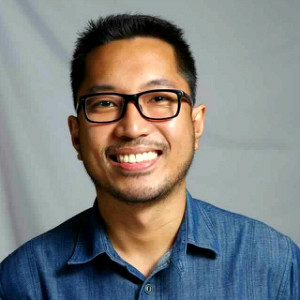
Jun Gudoy is the head of the Communications and Media Office of the province of Ilocos Norte under the leadership of Governor Imee Marcos.
Last May 30, 2016, Alaysa Tagumpay Escandor published a note in Facebook to firmly establish her point about justice and to answer Gudoy’s letter and other Facebook messages from strangers. According to her, these included six on forgiveness and “moving on,” four on the “sins of the Aquinos” and the merits of the Marcos years, two on the unassailability of the military career of Ferdinand Marcos, two discreet allusions to mauling her and one unsolicited diagnosis of my mental judgment that made her laugh. We are reposting it below:
To clear the air, I will address each point as succinctly as I can:
(1). I wrote my earlier post not to exact personal vengeance but to demand justice.
(2). Justice, because some of the gravest crimes in our history happened during Martial Law in a manner and scale that would not have been possible without the backing of then president Ferdinand Marcos.
(3). Justice, because it is the only real remedy to injustice. Martial Law saw the virtual institutionalization of injustice across all fronts: economic, political and cultural. Economic injustice through very aggressive borrowing from the World Bank, leaving the country with a US$26 Billion debt and empty coffers in 1986. Do a Google search of “William Saunders,” “Jane Ryan,” and “Xandy Foundation,” or you can read the related posts of Ed Lingao.
Political injustice through State brutality, hence the 70,000 political detainees, 35,000 tortured, and 3,257 “salvaged” — all in all, 108,257 of the country’s best and brightest, perished or punished for fighting for freedom. Go read the the exhaustive accounts of Martial Law from Amnesty International Philippines and Alfred McCoy’s Dark Legacy.
Cultural injustice through censorship of the press, arts and expression; the excesses of the Marcos family (3,000 pairs of shoes, 146 paintings, $21M jewelry); the invention of crony capitalism, Philippine style. Search in Google that iconic poem “Prometheus Unbound.”
(4). Justice, because the gravity of the crimes during Martial Law is not something the nation should just “forgive and forget.” In psychology, a person can only emerge from trauma with integrity intact if all the emotions, even the unwanted and painful ones, are acknowledged and recognized. To forget is to repress the emotion, to banish it into the shadows of the unconscious where it festers. In broad strokes, the same is true with national trauma. We can only “move on” in the truest sense of the term only after we have come to terms — that is, in full awareness and engagement — with our past.
(5). We must cease to think of justice and reconciliation as dichotomies. In fact, justice is one part of the larger process of reconciliation. Without justice, reconciliation will fail (and we will regress into a state of dysfunction — aren’t we seeing this now?).
(6). Justice is not the absence of forgiveness or mercy, but rather the transformative process of striving for equitable, fair and humane treatment for our people, both past, present and future.
(7). As a people, if we fail to demand for justice and accountability, we may very well consign to the future generation the same kind of impunity and brutality that has haunted our past. As they say, those who do not learn from history are doomed to repeat them.
(8). Whether you like it or not, the fate of those in Ilocos Norte is inextricably linked with the rest of the country. The country suffers, so too those in the North.
(9). Marcos’ unassailable military career is really the easiest to debunk. Take it from The New York Times, Marcos isn’t the kind of soldier you imagine him to be. He was a fake.
(10). While imperfect, the Libingan ng mga Bayani still stands as a symbol of our collective yearning to honor the people who served the country. The rules are clear about prohibiting the burial of persons “convicted by final judgment of a crime involving moral turpitude.” In 1986, Marcos was found guilty of violating the human rights of 10,000 Filipinos and made to pay a total of two billion dollars in compensation (Cesar Hilao et al., v. The Estate of Ferdinand Marcos).
(11). No, I am not a “yellow apologist.” I know about the Mendiola Massacre and Hacienda Luisita. But again, false dichotomies. To demand accountability from the Marcoses is not to say the Aquinos go scot-free.
(12). My mental health is perfectly fine. How about yours?
About the Author:

Alaysa Tagumpay Escandor is a development professional who works for Christian Aid, an international charity organization. Her name is a tribute to the silent heroism of her family members before her. She was part of the Center for Media Freedom and Responsibility and also worked as a Segment Producer for the Special Assignments Team of GMA News and later became a Producer for the network’s data journalism arm, GMA News Research. Read more of her articles here.






Leave a comment