


Note: This is the first time that SubSelfie.com is publishing a collective stance. Virality and its effects on news decisions are topics close to home. We hope to be able to publish more collective commentaries in the future.
What does it take to be viral on social media? Simple. You have to be a good-looking man in your mundane moments — like a farmer carrying a bag of carrots on the mountains of Benguet. Or edit that, make it a bag of cabbages instead.
If it doesn’t work, try a bag of broccoli. Or if you live in the urban jungle, make buhat a basket of chicharon or a huge bottle of distilled water.
In a social experiment that was more like a drunken dare from his friends, SubSelfie.com author Ephraim Aguilar jokingly posed that he was carrying a pile of monobloc chairs — eventually these pictures became an inside joke called #ChairMan.

But since he does not possess a pointed nose, or a supposed striking resemblance to a Korean pop star, the photo earned only around 300 likes on Facebook, most of them his friends. Yet surprisingly after two days, the photo landed on primetime newscast TV Patrol.

The Viral Syndrome
#ChairMan is a parody of what social media and TV stations are in a frenzy over the past few days.
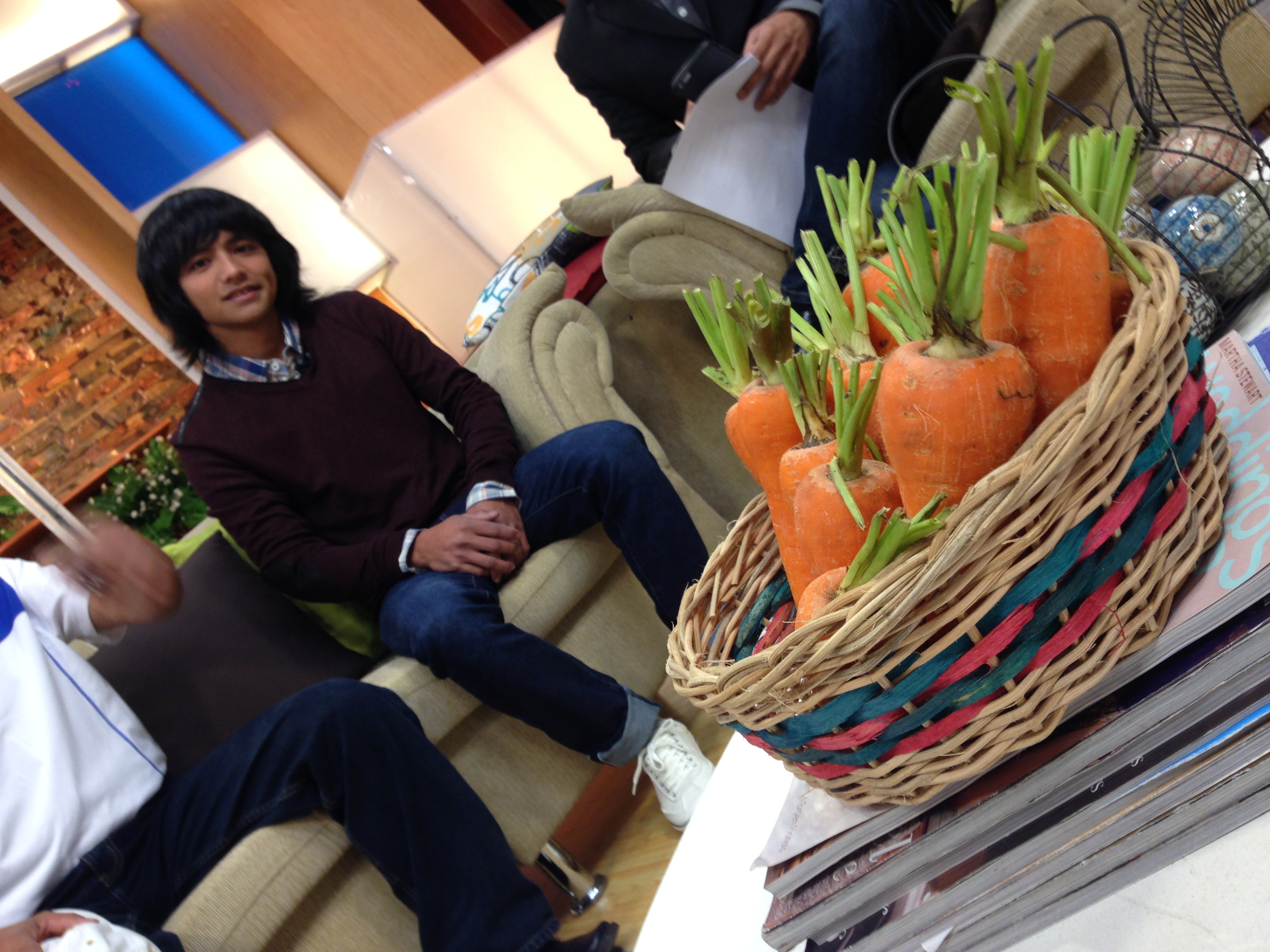
First, there was Carrot Man, later identified as Jeyrick Sigmaton, an Igorot-farmer-turned-Internet sensation. He took social media by storm when Sagada-bound tourist Edwina Bandong uploaded a photo of him carrying a bag of carrots. His unkempt hair earned him comparisons with popular K-Pop stars. Starstruck netizens quipped: “Where has he been all these years? Like, you know, he should be an artista.”
Then came other versions: #CabbageMan, #BroccoliMan, #ChicharonMan, #WaterMan, among others.
In media today, it seems anything that goes viral online is automatically deemed a story. But it’s important to ponder, what editorial judgement guides this? Is it mainly the need to generate high ratings in order to propel commercial interests? Or is it about giving what viewers “want” based on what’s trending — a mechanism made possible by the feedback system on social media?
Whatever it is, what’s viral is sticky. Anything nowadays can quickly become viral.
For the media, these viral stories are instant sure-hit content. Bentang-benta, as they say. But there are more golden opportunities that must not be missed. Social media is like a Pandora’s box of potential stories — like the girl who saved the Philippine flag from a flood in Albay or the high school student who recently used the flag to mop the floor. The former is inspirational; the latter is cringe-worthy. Both are newsworthy stories about the sense of nationalism of the Filipino youth.
With the diversity of social media content, TV news organizations can now slowly move away from the usual raters of evening news: petty crimes, dugyot stories, gossips and sex. There are simply more stories to choose from. Moreover, social media trends can provide a good opportunity for media to spark interest when it comes to more important stories.
For example, Carrot Man and other vegetable-inspired online sensations are not stars waiting to be discovered or mere novelties in a social media circus. Instead, they are men who toil everyday, hauling sacks of vegetables on their backs, eager to earn money to feed their families. They are the working class who settle for meager wages despite working long hours.

More than the Good Looks
In an interview with Kapuso Mo, Jessica Soho, Carrot Man wore a bahag to show his rich cultural heritage: “Proud ako na nakilala ako sa picture ko. Dahil doon, nagkaroon ulit ng interes ang mga tao sa Mountain Province at sa aming mga Igorot.” (I’m proud that I became famous because of my picture. Because of this, the people became interested about the Mountain Province and the Igorots).
Clearly, there is more to Jeyrick than his hoodie and good looks.
Professor Danilo Arao of the UP College of Mass Communication said: “Giving space or airtime to a person hauling or selling carrots for a living is only acceptable if the exploitation and oppression of vegetable growers nationwide would be analyzed. But if you would focus only on his good looks and boyish charm, you are helping dumb down your audience.”
Netizens have the power to make stories viral but journalists have the responsibility to substantiate them.
The media has the capability to tackle issues beyond face value. Thanks to Carrot Man, we hope some will start to ask the right questions. Who is Jeyrick Sigmaton and why is he stuck at the farm hauling carrots at age 21? Why did he drop out of school? How much does he earn?
And in the food basket of Luzon, why are farmers like Jeyrick poor?
Advocates of the rights of Indigenous Peoples are inclined to blame the General Agreement on Tariffs and Trade or the GATT in 1948. This became the World Trade Organization or the WTO in 1995.
The Philippines signed on to both, intending to liberalize trade by lowering tariffs or simply, to make our lives easier by having access to the world market.
Yet decades later, imported goods are dominating the Philippine market and farmers like Jeyrick and their local produce end up losing the competition.
“If this scheme continues, more farmers would lose their livelihood. The real solution to this is genuine agrarian reform,” says Adela Maybelle Deyaen-Wayas, an Igorot, Jeyrick’s ‘kababayan’ in the Mountain Province and a member of the group SIKLAB Philippine Indigenous Youth Network.
But if that’s too high brow, and before anyone can say “ang layo naman niyan sa sikmura!” consider this: the La Trinidad Trading Post, the jump off point for transporting highland vegetables to lowland markets, may possibly close down because the Department of Agriculture wants to convert it to a display complex of local products.
Likewise, several markets in Balintawak, Quezon City are also facing closure, worrying many Cordillerans about their businesses. If these closures pan out, not only would it affect farmers, it would also significantly affect the supply and prices of the food we eat. Ayan, malapit sa sikmura.
El Niño
Let’s even look beyond Cordillera. Jeyrick is lucky that he has carrots to haul.
In the Southern parts of the country, farmers are not yielding any harvest. The intense drought have destroyed over a thousand hectares of rice and corn fields in Matalam, Cotabato. Some P60-million-worth of crops have already been lost, prompting local authorities to declare a State of Calamity.
An even more important question: where has the P19.2-billion special fund for El Niño mitigating programs gone? In a recent House Inquiry, officials from the Department of Agriculture admitted that the special fund has yet to be released.
This is why there are no water pumps yet even though farmers in Mindanao badly need it because of the dry spell. Because of their tremendous losses, farmers are now dependent on food-for-work programs of the government.
But dole-out food would only last a meal. Where will they get money to send their children to school? How will they survive El Niño and the curse of a barren land?
Do they need a Carrot Man for us to pay attention?
[Entry 124, The SubSelfie Blog]







Leave a comment