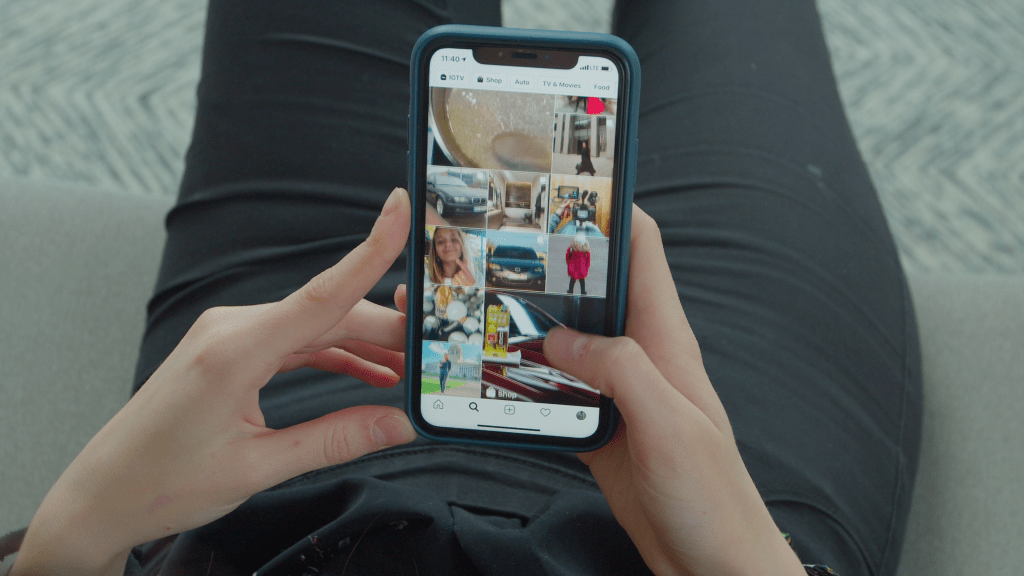
DUMP accounts have gained popularity in social media, allowing Generation Z internet users to fulfill a particular desire — to be heard and to be known for who they truly are, even within a small community.
In utilizing social media, users have the freedom to post whatever content they like. However, this freedom can sometimes lead to situations where an individual’s words and actions may unintentionally hurt others.
Hence, unlike main accounts, which are often meticulously curated for public audiences to see, dump accounts are typically private and unfiltered. This is where users post their casual and genuine self, as well as random thoughts and images, without thinking of others or how they would perceive them.

The audiences of these secondary profiles are also often selected with careful consideration.
These accounts provide a sanctuary for Gen Zs to present their authentic selves, freeing them from social expectations and public scrutiny.
The motivation behind dump accounts
For Gen Zs, their motivation to start a dump account stems from their desire to have a space for their personal affairs and attain peace when posting.
Mayen Medroso, 21, reflects on her upbringing in a strict, conservative household, which prompted her to create dump accounts. “Every share ko, pinupulis nila so I had this wild thought, which is to create a new account under a different name,” she explains. Over the past ten years, she made approximately 10 accounts on Facebook, 9 on X, and 2 on Instagram and Threads.
“When I created that account I had the freedom to do anything, to share anything, to post my pictures, to post my pictures with my friends, to post my selfies, to post what I think, what I thought, to post the poems that I wrote— literally anything,” she added.
Angielyn Fernando, 22, had no intention of starting a dump account yet ended up creating three to share her pictures and rants that she felt hesitant to post on her main profile.
Similarly, Jasmin De Guzman, 20, also made her dump account out of curiosity and a desire to upload casual photos from her phone. “At the time, my boyfriend and I weren’t legal yet, so I wanted a space to share our memories without fear of being seen by everyone,” she shared.
These experiences show that behind every secondary account lies a collective desire to have an exclusive and controlled audience, allowing room for genuine self-expression, and eliminating the pressures associated with social media.
What Gen Zs share
While primary accounts are more formal, polished, and projected towards a certain persona, dump accounts are spontaneous, random, and fun.
Since it’s mostly private, the content users post can vary. This may include:
- Unsolicited rants and thoughts. This content allows Gen Z to freely expose and release their inner and unfiltered thoughts, reflections, and frustrations about society, people, personal challenges, or basically anything.
- Fangirling affairs. Despite having the ability to share their interests on their main profile, dump accounts are often used to express their excitement, complaints, and opinions on idols, celebrities, movies, shows, or any fangirl-related content they share. This also provides them the platform to showcase their “OA” self or over-acting reactions towards their interests.
- Wild side. Having a dump account allows Gen Zs to bring out their wild side. But the “wild” side does not necessarily mean sensual posts and images, it can also be dark, creative, and unconventional ideas or jokes that might seem too much for others and might be prone to “cancel culture.”
- Raw photos and videos. For those self-conscious about their appearance, secondary profiles provide a safe space to share candid images and videos that they are not confident enough to post on their main account. These visuals can also be random snapshots or moments of themselves, their friends, or pets— anything they would not normally share on their main account.
Casual everyday moments. Whether it’s a random moment, nightlife, sunset, picnics, or trivial events, Gen Zs often dump them on these accounts. This type of content lets them document their daily experiences without the pressure of perfection, much like a digital diary or journal.
Bridging or complicating relationships?
Beyond content-sharing on their dump accounts, Gen Zs are also quite discerning about whom they choose to invite into their online spaces. This selection often depends on factors such as trust, the longevity of relationships, and shared interests.
For most users, it is an intimate space, where they can let people or close friends witness their vulnerabilities. This can foster stronger bonds to each other, as it provides mutual understanding outside the polished image they portray to the public.
However, for others, these accounts can complicate relationships, especially when conflicts arise or personal boundaries are breached, making them distance themselves from others.
“I’m very specific sa mga audience ng bawat dump account ko, and I hate it when kumakalat ‘yung pino-post ko sa ibang tao kasi nga that’s a different Yen. That’s a different personality na specific lang sa’yo, and why would share it to other person na iba ‘yung pagkakakilala sa’kin,” Medroso said.
Meanwhile, Fernando expressed her main concern about dump accounts are followers discussing her posts with friends outside of her closest circles. “Kaya ‘yung mga ina-add ko lang sa dump account is mga close na close ko lang talaga. Kaya ko sila in-add kasi malaki tiwala ko sa kanila na hindi nila pagsasabi ‘yung mga nandon sa dump ko,” she shared.
In terms of privacy in dump accounts, De Guzman learned the importance of setting boundaries and choosing the right people to share a glimpse of her life with.
Maintaining a dump account can influence relationships both online and offline. It can either strengthen a bond or present challenges in maintaining their character both in private and public settings.
Self-exploration in dumps
Apart from being an avenue for self-expression and building connections, a dump account may also allow you to discover and explore your identities or it may confuse you to the end of having an identity crisis.
“Nalalabas ko kung ano talaga ako sa pamamagitan ng pagpo-post,” Angielyn said as she finds sharing on dump account liberating.
Jasmin has also the same sentiments as she perceives her main account restricting her from posting what she wants. “Hindi naman sa hindi ko pinapakita ‘yung tunay na ako sa public, it’s just that sometimes, I feel [more] free sa dump, [to the point] na nalilimita ko ipakita [‘yung tunay na sarili ko] sa main [account].
On the other hand, Mayen sometimes feels like she’s going through an identity crisis and slowly losing herself because of her multiple accounts. “Hindi ko na kilala ‘yung sarili ko because of the dump accounts I have created, and because of the personalities I have been making and creating to mask kung ano ‘yung totoong ako. Buried na ‘yung totoong self ko that I’m not able to find it anymore,” she confessed.
For many, these secondary profiles became a mirror that reflects a part of themselves that they did not previously acknowledge. But for some, managing a different persona through various accounts complicates the search for self-discovery, blurring the lines of who they truly are.
About the Author

Ashly Mae Nabus is a journalism student at the Polytechnic University of the Philippines – Sta. Mesa. She explores stories that resonate with her generation and she is also passionate about amplifying the voices of others. In her free time, she writes poetry while playing music and captures moments through her camera. Ashly strongly believes that every photo, like artwork, has a story to tell.


Leave a comment