
Editor’s note: This review contains minor spoilers from the film.
There’s a moment in Sunshine, a new film starring Maris Racal and directed by Antoinette Jadaone, that captures what it means to be a woman in the most unexpected and quietly devastating way.
Sunshine is not loud. It doesn’t demand attention, but it lingers.
Like much of the film, the moment feels small, until it doesn’t. Until it hits you that what just happened wasn’t just a line or a scene. It was recognition. Understanding. A kind of emotional solidarity that women rarely receive from the world around them.
Because Sunshine isn’t just a story about an unplanned pregnancy. It’s about the loneliness of womanhood. The scrutiny. The impossible choices. And the haunting silence that often follows when a woman chooses herself.
This is not a film that offers neat resolutions. Instead, it lays bare the many ways society fails to truly understand women, especially those who are young, vulnerable, and simply trying to survive. Sunshine is not just heartbreaking, it’s painfully familiar.
Her Body, Everyone’s Opinion
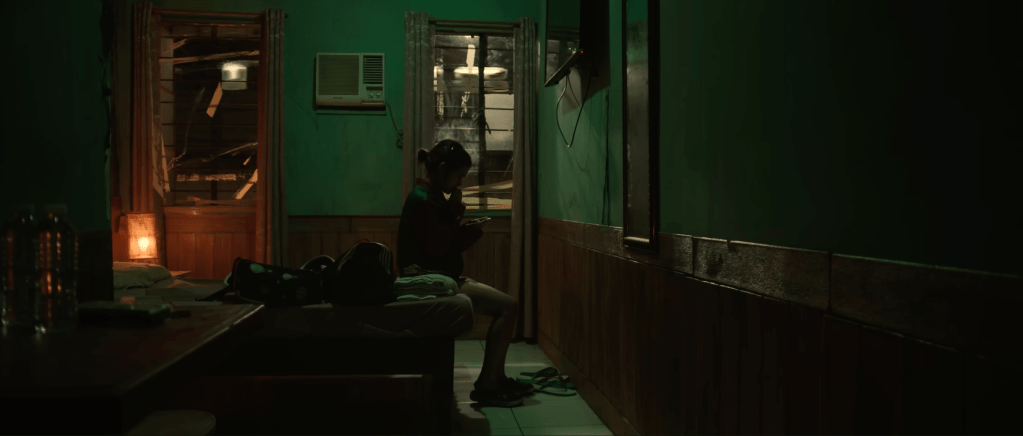
From the moment Sunshine learns of her pregnancy, her body stops being hers. Suddenly, everyone has a say in her decisions, her future, her morality. As a young woman chasing her dreams, her choice not to carry through with the pregnancy is treated as selfish, a cruel act rather than a carefully considered, emotionally grueling decision.
But here’s the truth: selfishness, as society defines it for women, is often just self-preservation. Sunshine choosing herself—her career, her peace, her future—is radical in a culture that demands women disappear into sacrifice.
This is the quiet violence of womanhood: to be expected to nurture no matter the cost, to become a mother even when unready, and to turn pain into strength without complaint. In Sunshine, we see a character who refuses to perform that script. She doesn’t romanticize motherhood. She questions and challenges it. And that makes people uncomfortable.
Because the film asks a question too many are afraid to confront: What does it really mean to be a “good woman” in a world where your worth is measured by how much you give up?
Consent Beyond the Bedroom
Sunshine subtly but powerfully illustrates how consent, or the absence of it, threads through every aspect of a woman’s life.
We see glimpses of this through different characters and moments. A young girl, barely in her teens, becomes pregnant after experiencing harm from someone she should’ve been safe with. Sunshine herself is shown walking through public spaces, only to be met with catcalls—a reminder of how women’s bodies are often treated as public domain. Later, after a difficult experience that lands her in the hospital, a religious medical professional speaks to her not with empathy, but with moral judgment, offering unsolicited spiritual guidance and framing her pain as a sin in need of repentance.
These moments, layered quietly throughout the film, highlight how consent is not limited to sex. It’s about emotional and spiritual autonomy. It’s about having the right to move through the world without being shamed, judged, or stripped of one’s voice, even in moments of pain or vulnerability.
In Sunshine, the most unsettling violations aren’t always loud or violent. Sometimes, they come in the form of people believing they know better — and speaking over women instead of listening to them.
When Womanhood Feels Like a Solo Battle
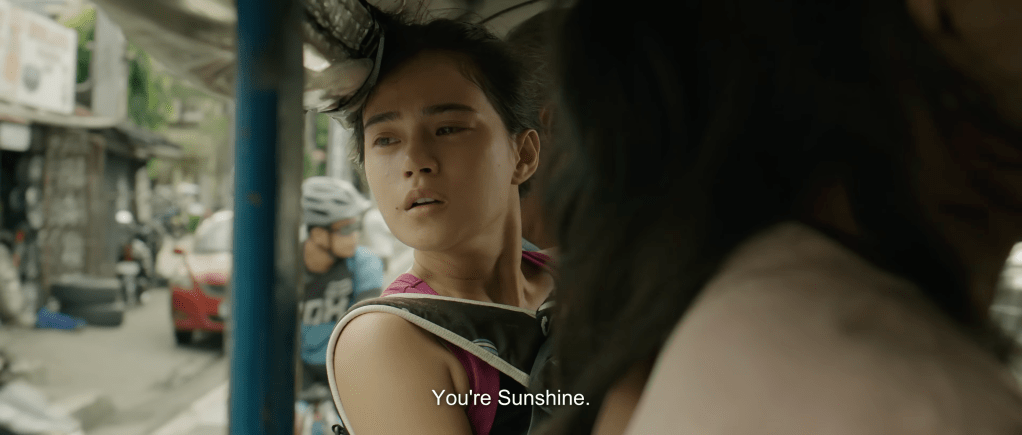
One of the most heartbreaking parts of Sunshine is how honestly it captures the loneliness of being a woman. Sunshine moves through life carrying emotions no one truly notices—disappointment, guilt, rage, fear. Even when she’s with others, she feels alone, weighed down by judgment, expectations, and silent grief.
The film shows how women are often left without real choices. Sunshine made me feel how womanhood can sometimes mean having no one on your side, no one to turn to. It’s like walking through life without a safety net, where even reaching out feels pointless because you know the world won’t understand.
The only moment she feels fully seen is by someone who doesn’t exist. And maybe that’s the saddest part—that imagined comfort feels more genuine than anything she receives from the real world.
The Power (and Tragedy) of “Gets Ko Na”
Sunshine doesn’t act carelessly when she chooses not to continue her pregnancy. She agonizes over it. Every time she thinks about it—every moment leading up to it—she apologizes to the Lord. She prays silently. She thinks of the child, of the life it might have had, of the pain it might inherit. This invisible labor—the weighing of futures, the silent grief, the impossible decision—is what womanhood often demands. And no one claps for it.
Now, that final line, “Gets ko na,” hits because it’s not what women usually hear. We’re used to being told, “Kaya mo ’yan,” “Bakit di mo na lang…,” or worse, “Kasalanan mo ’yan.” But understanding? That’s rare.
What’s even more heartbreaking is that this line doesn’t come from the partner who left, the society that judged, or the friend who shrugged it off. It comes from an imagined daughter, the life she could’ve had, now telling her: I get it, Ma.”
A Film That Finally Gets Us
Sunshine is not here to comfort; it’s here to confront. It reveals the raw and often hidden parts of womanhood—how our choices are rarely ours alone, how our pain is overlooked, and how we’re expected to smile even while struggling to survive.
But more than anything, it’s a film that tells us: you are not wrong for choosing yourself. In a world that insists women should always come last, that message feels revolutionary.
‘Gets ko na’ isn’t just a line of understanding in Sunshine. It’s a quiet reminder that women deserve to be seen and heard while they are still here, still hurting, still making impossible decisions. Not just afterward. Not just by imagined voices. But by the world that often refuses to look.Because maybe what we all need is for someone, anyone, to say it first: Gets ko na.




Leave a comment