
I’ve been wondering how far personal abstinence from using plastic straws could help our oceans.
In an audit conducted by Ecowaste Coalition in July 2016 at Freedom Island in Parañaque, straws comprised a miniscule percentage of trash collected in a one-day clean up drive. Of the 1,492 kilos of garbage, 79% is plastic trash. Of this percentage, plastic straws make up 1%. Other plastic waste materials in the audit were as follow:
- junk food wrappers and sachets — 20%
- plastic bags — 17%
- composite packaging — 12%
- food packaging — 9%
- polystyrene containers — 7%
- diaper liners — 7%,
- hard plastics — 4%,
- plastic twine — 1%
Based on this data, it appears that taking straws from our consumption habits is likely to have low predictive value in decreasing ocean pollution. But the thing is: just because something may not be contributing a lot to an end goal doesn’t mean it should not be practiced. It could be disheartening that small personal mindful choices may not be potent enough to immediately undo whatever environmental damage is out there already.
But is it not our small personal unconscious choices that led to the dismal state of the environment today? A case in point: had nature not been nudging us through catastrophes, no one would have taken initiative to regulate and ban single-use plastic bags.
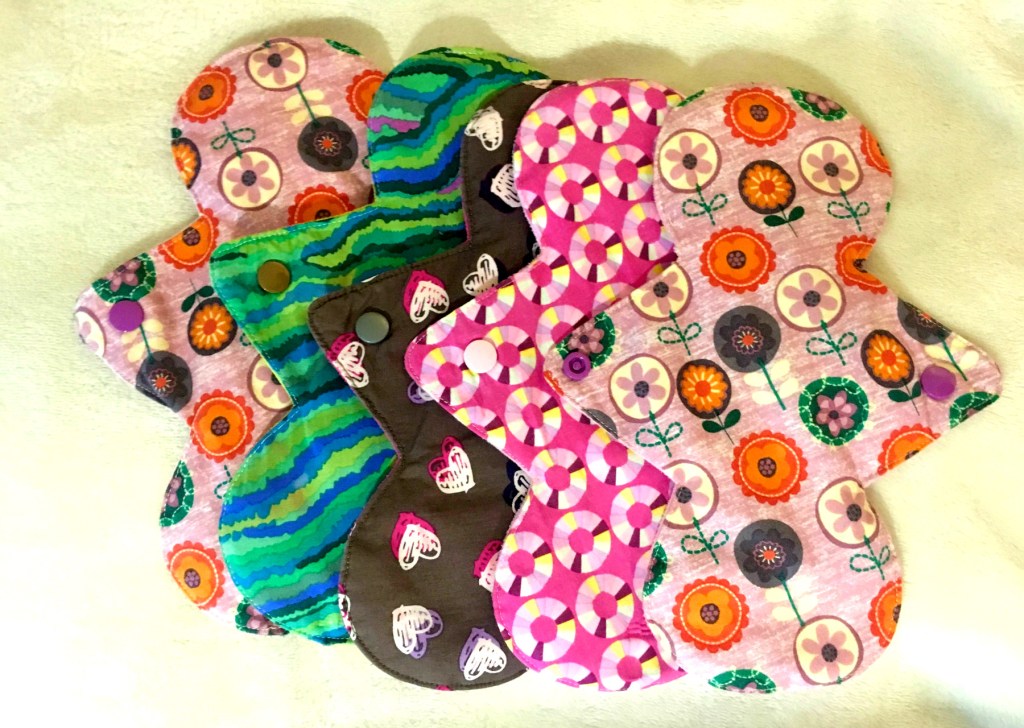
So in May 2016, I made an unpopular personal care choice. From the convenience of disposable napkins, I switched to the humble, cumbersome, yet now modernized pasador hoping that this cuts nature some slack.
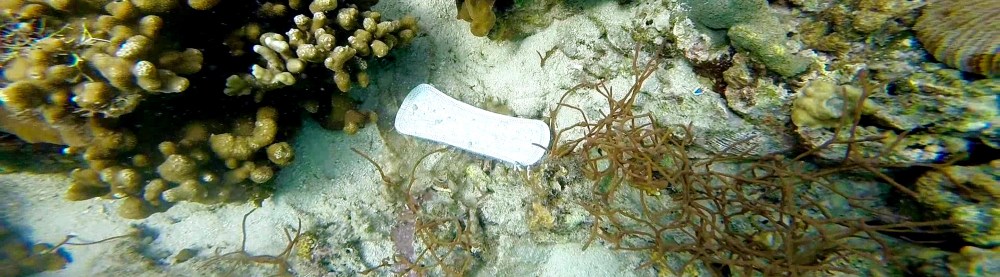
Based on the abovementioned audit, diaper liners (which include sanitary pads, panty liners and disposable diapers) comprised 7% of plastic waste collected in the clean up. During my scuba dives, disposable sanitary napkins, panty liners and diapers are among the omnipresent trash we retrieve.
My mother, who spent her adolescent years using untailored pieces of cloth as “napkin,” has warned me of inconveniences: Handa ka bang maglaba? Parang may oras ka pa ha. (Are you sure of your decision? It’s as if you still have time for hand washing.)
My sister’s reaction was the more classic “Ew!,” as she still refuses to entertain the fact that once upon a time women managed without disposable pads.
Before taking my evening shower, I handwash my blood-drenched cloth napkin and soak it in bleach and marine-life friendly detergent. In the morning, I rinse and clip it on the clothesline to dry before taking my bath.
For up to seven days every month, I go through this drill. There were times that I had to do the washing in the wee hours of the morning after getting home from work. But I’m better off living with less guilt than mindlessly throwing my napkins in the bin like before, leaving some unappreciated garbage collector to take care of them. I hope this cuts them some slack too. It’s my body waste anyway and I think I should be the one taking responsibility for it. Besides, I also benefit from saving some money.
Let’s Do the Math… and Science!
I currently have 10 cloth pads that I bought online for P150.00 each. Pretty hefty but I was thinking long term — savings, my skin asthma and the planet.
Every month, I consume an average of 14 “winged” and “heavy duty” pads costing around P12 a piece, since my mother buys them in packs of 10’s or 20’s. This means that since May, the household saved P1,008.00 already.
The environmental impact of foregoing disposable pads should also be taken seriously. If only a small portion of disposed napkins make their way to our oceans, judging by Ecowaste’s July 2016 audit, a lot of them find their way to our dumpsites according to a report published in 2007 by the Philippine Center for Investigative Journalism.
Citing a gynecologist, the report said a woman would dispose up to 14,000 pads in a lifetime. According to Women’s Environmental Network (WEN), a UK-based organization of advocates for the environment through feminist principles, pads are 90% made up of plastic and therefore would take hundreds of years to disintegrate.
Various environmental organizations have also warned of dioxins contained in sanitary pads and tampons. US-based NGO, Women’s Voices for the Earth (WVE) for instance, claims to have conducted tests on a number of menstrual products and found out that tampons and pads contain dioxins, furans , pesticide residues and unknown fragrance chemicals. According to the group, these chemicals are carcinogenic, and can cause reproductive and endocrine harm.
The US Food and Drug Administration, however, dismissed this concern as “rumors” having no basis on “available scientific evidence.”
The US FDA has assured the consuming public that “state-of-the art testing of tampons and tampon materials that can detect even trace amounts of dioxin has shown that dioxin levels are at or below the detectable limit. No risk to health would be expected from these trace amounts.”
WVE argued in its product test results that while the levels of toxic chemicals detected were relatively low, “their presence warrants health concerns for women.”
The group further asserted: “Menstrual pads are designed to have direct contact with highly absorptive and sensitive vulvar tissue for extended periods of time. Toxic volatile chemicals emitted from menstrual pads could be absorbed into women’s bodies. This is especially concerning because the chemicals in question are linked to cancer.”
Consequences
I am aware that as a journalist, sooner or later I would have to find a way to manage using cloth pads in out of town coverages.
The challenge came in July during a monsoon coverage in Bataan. I nearly decided to revert to disposable pads, stressing out at the thought of packing some detergent and washing cloth pads in a hotel bathroom. But it is my home province and it deserves the same environmental concern I have for Manila where I reside now.

Inevitably, I reported about flooding that I had never experienced while growing up in my home town in Mariveles. And much of flooding is attributable to plastic trash clogging the water ways.
As if in a deja vu, in August, during my period, I was again sent out to cover flooding and monsoon rains, this time in Pampanga, where a concrete house in a subdivision was totally destroyed by flash flood.
In an attempt to comprehend what just happened, a resident explained that overflowing water from a nearby creek had perhaps nowhere to go since waterways leading to the river were clogged by a lot of garbage. Between garbage and concrete walls, the water had enough force to make its way out through the latter. Fortunately, no one was harmed in the incident.


“Bleeding with Pride”
Just this month, I attended an environmental journalism forum and workshop in Singapore wearing a cloth pad. I was, as cloth pad advocate and blogger Kimberly Mok has aptly put it, “bleeding with pride.”
The travel of my cloth pads to SG, however, did not materialize without amusing discussions with family and friends.
Taking cloth pads with me meant washing them in the hotel bathroom hence, the need to pack some detergent. I initially repacked some marine-life friendly detergent we have at home in a ziploc. But I had to compromise buying sachets of the usual detergent from a convenience store after hearing what the most important people in my life had to say:
Jasper: Baka mag-mukhang drugs ‘yan ha, ma-harang ka pa sa airport. (That might look like illegal drugs. You could get blocked at the airport.)
Me: Hindi nomooooon. (I don’t think so.)
Anna: Ah hahahaha. ‘Wag mo na i-risk yan. Haha. Parang drahgs nga kung ganyan! Hahahaha. Magkano ba ang peace of mind. Chos. Hahahaha. (Oh please don’t risk it. It could look like illegal drugs. How much is peace of mind, anyway?)
Me: Ahm… P7.50?
It has been repeated and heard several times in the discussions in the said forum that “environmental journalists cannot not have an agenda” – the desire to save the planet. Let me clarify, however, that despite my advocacies, I do not want any manufacturer going out of business. The disposable nappies and pads industry employ a significant number of Filipinos and this allows breadwinners, heads of families, single parents, etc., to put food on the table. But I’m sure a path can be built toward the direction of sustainability and profit. I hope we build this path soon before it’s too late.
[Entry 177, The SubSelfie Blog]
About the Author:

Tricia Zafra is a correspondent and anchor working for GMA News. She graduated from UP Diliman with a degree in Bachelor of Arts in Broadcast Communication, cum laude, and is currently taking up graduate studies in the Department of Psychology in the same university. She is a vegetarian, painter, and a certified open water scuba diver. Read more of her articles here.






Leave a reply to clarydavid Cancel reply